Honoring the Life of
Pope Francis
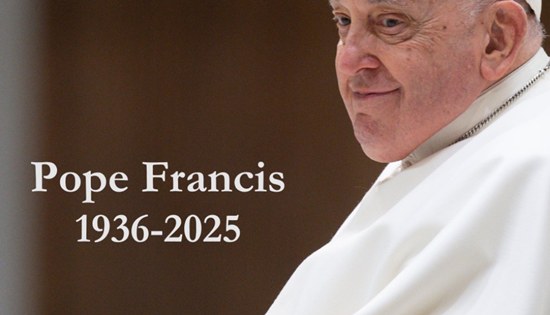
A
PEPP Statement on the passing of Pope Francis, Bishop of Rome
April 25, 2025
He has shown you, O
mortal, what is good. And what does the LORD require of you? To act
justly and to love mercy and to walk humbly with your God. (Micah
6:8)
The Philippine Ecumenical
Peace Platform is profoundly saddened by the passing of His Holiness
Pope Francis on this solemn Easter Monday, April 21, 2025, at the
age of 88.
A man of compassion and
humility, Pope Francis—affectionately called “Lolo Kiko” by
Filipinos—devoted his life and ministry to the service of the Lord.
He inspired millions of people around the world by his prophetic
pronouncements, especially in defense of the poor and the oppressed.
He strongly condemned
economic policies that deepened poverty, inequality and
environmental degradation, stressing that occasional acts of charity
are not enough. In his message for the World Day of Peace last
January, he reminded us that the earth and its resources are meant
to be used, enjoyed, and preserved by everyone, not just by a
privileged few. He also appealed to richer nations to cancel the
foreign debts of poorer countries, in recognition of the ecological
debt owed by the former to the latter.
He consistently advocated
for the welfare of refugees, the liberation of prisoners of war and
political prisoners, and the protection of marginalized peoples. He
denounced war and all forms of violence, upholding the inherent
dignity of every human being. During his Easter message on Sunday,
April 20, he called for a ceasefire in Gaza, the release of
hostages, and food for the starving. Embracing the Gospel call to be
peacemakers, he urged us to tear down the walls of division and
build a community of peace rooted in justice.
His Holiness saw these as
the true weapons of peace that can shape a better future.
May this time of mourning
move us to reflect on the life of Pope Francis, who acted justly,
loved mercy, and walked humbly.
Let us follow his example
and heed God’s call to be instruments of justice, peace, and the
protection of human rights for our fellow countrymen.
Issued and signed on this day, 25th of April 2025.
(Sgd.) Archbishop Emeritus Antonio J. Ledesma, SJ, D.D.
Archdiocese of Cagayan de Oro City
Co-chairperson, PEPP
(Sgd.) The Rt. Rev’d. Rex B. Reyes, Jr.
Episcopal Church in the Philippines
Co-Chairperson, PEPP
Ecumenical Bishops Forum (EBF)
(Sgd.) Bishop Emeritus Deogracias S. Iñiguez, Jr., D.D.
Diocese of Kalookan
Head, PEPP Secretariat
(Sgd.) Sr. Mary John D. Mananzan, OSB
Office of Women and Gender Concerns-Conference of Major Superiors in
the Philippines (OWGC-CMSP)
(Sgd.) Rev. Dr. Aldrin M. Peñamora
Executive Director, Peace and Reconciliation Commission-Philippine
Council of Evangelical Churches (PARC-PCEC)
(Sgd.) Ms. Minnie Anne M. Calub
General Secretary, National Council of Churches in the Philippines (NCCP)
A right path towards
achieving peace based on justice
A Statement on the arrest
of former President Rodrigo Roa Duterte
March 18, 2025
Lord, you know the hopes of the helpless. Surely you will hear their
cries and comfort them. You will bring justice to the orphans and
the oppressed, so mere people can no longer terrify them. (Ps.
10:17-18)
After years of crying out for justice, the families of victims of
extrajudicial killings during the administration of former President
Rodrigo Roa Duterte held higher their hopes on Tuesday, March 11,
2025. On that day, the International Criminal Court (ICC), through
the Philippine National Police, served the warrant of arrest to the
former president for crimes against humanity.
The Philippine Ecumenical Peace Platform (PEPP), joins all people of
goodwill in welcoming former Pres. Duterte’s arrest. This is a
significant step towards justice for victims of drug-related
killings – many of whom were denied due process and, ultimately, the
right to life. This marks progress towards accountability, upholding
of human rights and God’s gift of human dignity. The arrest is a
signal to ending the culture of impunity prevalent in the country.
It is also a right path towards achieving peace based on justice.
During his stint as mayor of Davao City and as president of the
Republic, Duterte waged a bloody “war on drugs,” purportedly to
eradicate criminality and the illegal drug trade, which he framed as
a threat to the safety of Filipinos. However, this campaign resulted
in thousands of deaths, disproportionately affecting the poor and
marginalized. Their families, already burdened by grief, were pushed
deeper into poverty as many victims were breadwinners. Furthermore,
among those killed were children – whom Duterte and his chief drug-war
implementer, Sen. Bato Dela Rosa, dismissed as mere “collateral
damage.”
Human rights advocates repeatedly condemned Duterte’s campaign of
mass killings, urging him to address the underlying issues that
drive people into drug abuse and criminality. Duterte could have
looked into widespread poverty, unemployment, lack of access to
social services, the inequitable distribution of resources,
corruption, and bad governance. There are also the roots of unpeace.
His refusal to heed these calls has now led to his reckoning, as he
is now facing the bars of justice for the lives his drug war took,
lives he was sworn to protect.
One must recall that former Pres. Duterte unilaterally terminated
the peace negotiations between the Government of the Republic of the
Philippines (GRP) and the National Democratic Front of the
Philippines (NDFP) in November 2017. Consequently, he declared the
latter, as well as the Communist Party of the Philippines and New
People’s Army (CPP-NPA), as “communist-terrorist organizations.”
After the termination of peace negotiations, he released Executive
Order 70, formed the National Task Force to End Local Communist
Armed Conflict (NTF-ELCAC), and launched an all-out war against the
CPP-NPA-NDFP and “communist terrorist front organizations”. This
resulted in rampant red-tagging, filing of trumped-up charges,
tokhang-style extrajudicial killings like the “Bloody Sunday” of
2021 in CALABARZON, and other violations on human rights and
international humanitarian law. Duterte’s inhumane project included
the indiscriminate bombing of communities. The situation worsened
when the Legislative bodies, upon his prodding, passed the vague
Anti-Terrorism Law (ATL).
As peace advocates, we continue to stand in solidarity with the
families of the victims and affirm the sanctity of human life
through human rights. We also reiterate our unwavering call for the
resumption of the GRP-NDFP peace process and the government of Pres.
Ferdinand Marcos, Jr. to abolish the NTF-ELCAC and other laws like
the ATL, which are impediments to the peace process.
May this be a time to bear one another’s burdens, demonstrating
through our prayers and actions the Lordship of Jesus Christ on
earth. Let us pray and participate in ensuring that God’s justice
and righteousness will prevail in the verdict of Duterte’s upcoming
trial, revealing how the Lord of all despises evilness, especially
the mistreatment of widows and orphans (Exod. 22: 22-25).
Issued and signed on this day, 18th of March 2025
(Sgd.) Archbishop Emeritus Antonio J. Ledesma, SJ, D.D.
Archdiocese of Cagayan de Oro City
Co-Chairperson, PEPP
(Sgd.) The Rt. Rev’d. Rex B. Reyes, Jr.
Episcopal Church in the Philippines
Co-Chairperson, PEPP
Ecumenical Bishops Forum (EBF)
(Sgd.) Bishop Emeritus Deogracias S. Iñiguez, Jr., D.D.
Head, PEPP Secretariat
(Sgd.) Sr. Mary John D. Mananzan, OSB
Office of Women and Gender Concerns-Conference of Major Superiors in
the Philippines (OWGC-CMSP)
(Sgd.) Ms. Minnie Anne M. Calub
General Secretary, National Council of Churches in the Philippines (NCCP)
What to do when tempted
 By
Fr. ROY CIMAGALA,
roycimagala@gmail.com
March 8, 2025
OBVIOUSLY, the thing to do
is to immediately go to Christ who will show us and empower us with
the proper way to deal with the many temptations in our life. We
should never just be by ourselves when these temptations come,
thinking that we can rely solely on our own strength. Such thought
definitely would come from the tempters themselves – our wounded
flesh, the world’s allurements and the devil himself.
When we find this recourse
to Christ difficult to do, we should just force ourselves to be
humble, always acknowledging our helplessness before the forces of
evil, and begging our Lord to help us. This way we can even convert
these temptations into golden occasions to grow in our spiritual
life. St. Paul said so in so many words: “In all things God works
for the good of those who love him.” (Rom 8,28)
It’s only when we refer
these temptations to Christ that things get clarified. Let’s
remember that temptations will always make use of something
desirable, anchored on some good and true things which are subtly
and deceptively distorted and corrupted.
They will always appeal to
our weaknesses. Thus, if we would just use a little bit of common
sense, temptations can offer us some advantage since they point to
us where our weaknesses are, where we have to focus our efforts to
correct.
In a sense, temptations
encourage us to develop the virtues that are affected by them. They
remind us to be always humble and to ever depend on God rather than
on our powers alone.
And so, we have to work
hard in building up this relation with God if we want to keep some
safe distance away from temptations. If our love for God is hot, the
devil and the other tempters will find it hard to get near us, just
like a fly would not get close to a hot soup.
Our usual problem is that
we tend to be by ourselves when temptations come, and to rely simply
on our powers which actually are already heavily compromised since
our wounded flesh is an ally of the enemies of our soul. We always
have a Trojan horse in our personal lives.
Without God’s grace we
simply cannot do anything except to fall, if not soon then later. It
would just be a matter of time. But when we are with God, we get to
see the whole picture, and can distinguish the poison embedded in
the many good, beautiful, true and sweet things that the temptations
come with.
From there we would know
what strategy to take. Very often, what can be effective is simply
to ignore the temptation and to pour scorn on the evil spirits
behind the temptation. This is effective if in the first place our
spiritual life is healthy, with faith and love for God and for souls
vibrant and strong.
But then when such faith
and love is not that strong, the temptations can gain some foothold
in us. When we notice this, our reaction should be just to stay calm
and not to dare to get overexcited. When there is a storm around, we
usually would stay home or at a safe place to ride it out, and avoid
going around.
The same with this
particular case of temptations gaining some foothold in us. It
simply means that God is allowing these temptations to come to show
us where we are weak, and therefore where we should do something
about.
Living out the spirit
of EDSA: A call to the Church people
A statement by One Faith. One
Nation. One Voice.
February 24, 2025
As followers of Christ, we
are called to be bearers of truth, justice, and righteousness. Our
faith is not passive; it demands that we take a stand against
oppression and work for the liberation of the poor and the
marginalized. The spirit of EDSA People Power 1 is a testament to
this call – a powerful reminder that when people are united in faith
and purpose, they can overcome even the most entrenched forms of
tyranny.
The victory of EDSA was not just a political triumph; it was a moral
and spiritual awakening. It showed us that courage, compassion, and
solidarity could break the chains of dictatorship. People from all
walks of life – rich and poor, religious and secular, young and old
– came together with a shared hope: to reclaim their dignity
and restore democracy. This was more than just an act of resistance;
it was an expression of love for our country, fueled by faith in a
God who sides with the oppressed.
Yet, decades later, we
find ourselves confronting the same forces of greed, deception, and
repression. The same powerful family that was unseated by the people
now holds the reins of government once again, perpetuating a system
that keeps millions in poverty, silence, and fear. The biblical
mandate for justice has never been more urgent. Proverbs 31:8-9
commands us:
"Speak up for those who
cannot speak for themselves, for the rights of all who are
destitute. Speak up and judge fairly; defend the rights of the poor
and needy."
As a Church, we cannot be
neutral. Silence in the face of injustice is complicity. The
prophetic tradition of our faith calls us to be the voice of the
voiceless, to expose lies with truth, and to resist evil with love.
Living out the spirit of EDSA means more than remembering history –
it means embracing a continuing commitment to social transformation.
We must educate ourselves
and our communities about the realities of injustice, the
distortions of history, and the threats to democracy. Let us root
ourselves in Scripture and in the social teachings of the Church so
that our faith informs our activism.
The struggle for justice
cannot be fought alone. Just as EDSA was a collective movement, we
must build communities of resistance and hope, standing together in
the fight against corruption, disinformation, and oppression.
Faith without works is
dead (James 2:26). Our commitment to Christ must manifest in
concrete actions – advocating for human rights, supporting the poor,
exposing lies, seeking accountability for misdeeds, and challenging
the systems that perpetuate suffering.
The challenge is before
us. Will we remain passive in the face of oppression, or will we
rise as a prophetic voice for justice and righteousness? The spirit
of EDSA is alive whenever we choose to act in faith, speak truth to
power, and build a nation where justice and peace reign.
Let us stand together –
for God, for people, for truth, for freedom.
"Blessed are those who
fear the Lord"
By
Fr. ROY CIMAGALA,
roycimagala@gmail.com
February 13, 2025
THAT’S from Psalm 128,1.
The verse is often used as a responsorial psalm in many of the
Masses during the year. And it definitely talks about a healthy kind
of fear that is nothing other than a gift of the Holy Spirit. It’s a
fear that protects and prevents us from offending God through sin,
through disobedience to his loving and saving will for us.
We have to know when to be
afraid and when not. We have to distinguish between a good fear and
a bad fear, a healthy one and a sick one. We need to know how to
handle and deal with our fears that are unavoidable in our life.
Fear is an emotion that we
need to educate also. It just cannot be on its own, guided only by
our spontaneous judgments and reactions, and appearing when it’s not
supposed to, and not appearing when it’s supposed to. It has to be
grounded and oriented properly, expressing the sublimity of our
dignity as persons and children of God.
We need to fear because
that is what is proper of a child of God as we all are. There’s
always a healthy kind of fear involved in any relationship that is
based on love and respect. It is the fear of not offending the other
party. And this is much more so if the other party is superior to
us. If the other party is God himself, then this filial fear is
absolutely needed.
Besides, such fear can
trigger a series of good effects. A passage from the Book of
Proverbs affirms this. “The fear of the Lord is the beginning of
wisdom.” (9,10) Pope St. Gregory the Great, in explaining the
dynamism of this filial fear, says:
“Through the fear of the
Lord, we rise to piety, from piety then to knowledge, from knowledge
we derive strength, from strength counsel, with counsel we move
toward understanding, and with intelligence toward wisdom and thus,
by the sevenfold grace of the Spirit, there opens to us at the end
of the ascent the entrance to the life of Heaven.”
With this fear of the
Lord, we acknowledge we are creatures who are always dependent on
God. This is what is called the ‘poverty of spirit’ that figures in
one of the beatitudes, “Blessed are the poor in the spirit for
theirs is the kingdom of heaven.”
It’s this fear that we
should foster, especially these days when we see a lot of people who
are not afraid anymore to offend God. Though to be fair, we can also
say that many do not fear God anymore because in the first place
they don’t know him. No one fears what he doesn’t know.
We have to acknowledge
some facts that we can gather nowadays. Like, there definitely is a
lack of religious formation among many people, especially the young
ones. This is aggravated by the fact that the reception of the
sacraments is getting less and less. There is also a shortage of
vocations and the rate of fidelity and perseverance to one’s
vocation is low.
There is also a loss of
the sense of sin even among Christians. And those who appear to be
Christians often lack consistency with their faith when scrutinized.
There definitely is a great need for catechesis and pastoral
accompaniment.
Let’s hope that we can
properly tackle these issues that should lead us to have a holy fear
of God.
Baybay's rising hope:
Doves of peace and a brighter future

By
Pastor AL MAGNO TINIO
February 8, 2025
On February 7th, 2025, under the clear Leyte sky, a breathtaking
spectacle unfolded. More than a ceremony, it was a testament to the
indomitable spirit of Baybay City. As white doves ascended, their
wings catching the sunlight, they carried with them not just
feathers, but the hopes and dreams of a community reborn. These
weren't mere birds; they were living symbols of purity, cleansing
the city of the past's shadows and ushering in a new era of peace.
This declaration of Stable Internal Peace and Security Condition (SIPSC)
marked a pivotal moment, a victory hard-earned through shared
sacrifice and unwavering commitment. It was a profound
acknowledgment of the resilience of the Baybayanons, their strength
forged in the crucible of conflict.
The ceremony itself was a symphony of emotion: palpable relief,
cautious optimism, and a profound sense of gratitude. Mayor Jose
Carlos L. Cari's words, heavy with the weight of years spent
striving for peace, resonated deeply. His voice, a chorus of thanks
to the Philippine Army, the Philippine National Police, and the DILG,
echoed the collective sentiment. Their collaboration, a powerful
embodiment of the "Whole of Nation Approach," had yielded a harvest
of hope.
Brigadier General Noel A. Vestuir's commendation was more than a
formality; it was a heartfelt tribute to the sacrifices made. His
words, "The declaration… signified our hard-earned victory of
winning the peace in which some of us offered the ultimate sacrifice
to achieve," resonated with a poignant blend of loss and triumph.
The unspoken stories of bravery and loss, carried on the wind
alongside the doves, served as a solemn reminder of the price of
peace. Yet, amidst the sorrow, a brighter future emerged, painted
in the hopeful white of those soaring birds.
The signing of the Memorandum of Understanding (MOU) and Pledge of
Commitment was not merely bureaucratic; it was a sacred promise, a
collective vow to safeguard the delicate bloom of peace. This
promise, carried on the wind, whispered a hope for a transformed
Baybay City – a city where children's laughter would finally silence
the echoes of conflict.
This SIPSC declaration is not an ending, but a glorious dawn after a
long, dark night. It stands as a testament to the enduring spirit of
the Baybayanons, a beacon of hope illuminating a future where peace
and understanding reign supreme. The path ahead may hold challenges,
but today, in Baybay City, hope takes flight. The doves' ascent is
a potent visual metaphor for the boundless possibilities that lie
ahead – a city liberated from conflict, empowered to build a better
tomorrow. A tomorrow where children play freely, and families plan
for the future without fear. In Baybay, the future is not just
bright; it is soaring.
Demonic attacks on the
rise
By
Fr. ROY CIMAGALA,
roycimagala@gmail.com
February 3, 2025
THIS should be no surprise
to us. With the way things are now – new technologies offering more
temptations than real advantages, and people spiritually and morally
impoverished – what can we expect? That’s why requests for exorcism
and deliverance have dramatically increased these days, not to
mention the increasing cases of mental illness, psychological
disorders, suicide, etc.
We should never take the
devils for granted. They are always around, ever scheming and
plotting against us in many, many ways, and often in a manner that
is so subtle that we may not even notice them. As St. Peter would
put in his first letter: “Your adversary, the devil, prowls around
like a roaring lion seeking someone to devour.” (5,8)
We should never consider
the devils as a myth, or as some kind of literary device only to
highlight a point in the drama of our life. They are as real as you
and me. Our problem is that we think lightly or, worse, falsely of
them. And so, we become completely unprepared to deal with their
antics.
But in spite of that
unfortunate fact of life, we should remember that the devils cannot
do anything against us unless allowed by God. And if allowed, it is
because God in his mysterious providence can always draw a greater
good from any evil the devils may cause in us.
We need to have a good
grip on this rapidly emerging menace. And the first thing to do is
to entertain the possibility that indeed these people who are
disturbed by evil spirits are both mentally sick and demonically
bothered.
Yes, while it’s true that
the predicament can be an either-or proposition, we should not
dismiss the possibility that it can also be a both-and one. Not just
disjunctive, but also conjunctive. Let’s remember that the devil is
always around. It’s not paranoia to be always alerted of the devil’s
existence and his constant efforts to destroy us, usually in very
sweet ways.
It would be good if we
level up in our knowledge of psychology. This field of science is
getting to be more and more relevant these days. It cannot anymore
be the exclusive interest of some people. Everyone should know at
least the basics of psychology and from there start accumulating
relevant helpful information.
But we should never forget
that the psychological and mental mechanism of a person is steeped
in his spiritual dimension that can lead him either to the
supernatural or infranatural world. It cannot be studied from the
point of view of empirical science alone. It has to input the truths
of faith to enable it to cope with the full range of its
possibilities.
This is a point that
should be taken more seriously these days. The complicated
challenges of our times that have brought about many good things and
also many bad things cannot but make this kind of demand. We have to
take our faith more seriously, assimilating it in our system and
making it the guide and shaper of our lives.
With our faith, we have
the answer to all the questions, the solution to all our problems,
even if the answers and solutions it offers may not be the ones we
want. But they are the answers and solutions that God himself gives,
and not just us.
Faith is the great healer,
the constant pacifier, because it brings Christ into our lives,
Christ who heals and who constantly tells us, “Do not be afraid...”
We should bring our faith to bear on our sciences and on our other
sources of knowledge.
“Today is born our
Savior, Christ the Lord”
By
Fr. ROY CIMAGALA,
roycimagala@gmail.com
December 25, 2024
THAT’S the Good News of
great joy for all of us! Let us take time to savor the significance
of Christmas so that whatever happens in our life, however the
twists and turns of life may take us, we are assured that we have a
Savior who will take care of us in all our conditions, whether good
or bad.
In one of the readings of
the Mass for Christmas, from the Letter of St. Paul to Titus, we
read the following assurance: “The grace of God has appeared, saving
all and training us to reject godless ways and worldly desires and
to live temperately, justly, and devoutly in this age, as we await
the blessed hope and appearance of the glory of our great God and
savior Jesus Christ, who gave himself for us to deliver us from all
lawlessness and cleanse for himself a people as his own, eager to do
what is good.” (2,11-14)
May we never give in to
the subtle tricks of the enemies of our soul – our wounded flesh,
the allurements of the world, and the devil himself—who would urge
us to fall into discouragement, despair and hopelessness. We have
everything that we need to be what God wants us to be, despite
whatever failings we will always have.
But let’s go through some
process of lifelong training under Christ’s guidance, if not with
Christ himself, so that we would learn to live as true children of
God as God wants us to be. In this regard, let us learn how to deal
with our weaknesses, temptations and all evil and negative things we
have to contend with in this life.
That Christ allowed
himself to be tempted (cfr. Lk 4,1-13) means that he wants us to
know how to deal with temptations. As we can see in that episode,
the temptations the devil played on Christ involved good things but
poisoned with a bad intention. Temptations are always like that –
they will always be based on something good since evil cannot exist
without being anchored on something good and true which it tries to
distort and corrupt.
Like Christ, what we
should do is to clarify the real intent and purpose of the good and
the true that the devil and the tempter want to distort. This can
only happen if we refer the temptation to God himself, and not just
to ourselves and much less to the tempter himself. In the
temptations of Christ, Christ clarified things to the devil.
Once we realize the real
intent of the good and the true that the tempter uses with
deception, let us make use of the very urgings and promptings that
the temptation provokes in us to pursue the real intent of the good
and the true as defined by God and described by the many
instrumentalities we have in the Church.
Indeed, temptations can
occasion a great good if we would only know how to see the good and
the true that they try to distort, and then channel their urgings to
do the real good and the true as defined by our Christian faith.
To be sure, this way of
reacting to temptations will give us peace and joy, and a drive and
a zeal to do good. It will start to heal our spiritual and moral
weaknesses. In a sense, temptations, if dealt properly, can be a
great gift!
MERRY CHRISTMAS TO ALL!
Clemency is closing a
bitter chapter
A press statement of the
Ecumenical Bishops’ Forum (EBF) on Mary Jane Veloso clemency
December 10, 2024
After close to fifteen
years of imprisonment, the Ecumenical Bishops’ Forum joins other
groups in urging the Philippine Government to grant full clemency to
the detained mother of two boys – Mary Jane F. Veloso. This, after
the Indonesian Government agreed to the repatriation of Veloso to
the Philippines. Meanwhile, those responsible for Veloso’s arrest
after she was arrested as a “drug mule” at an Indonesian airport
were also arrested and jailed.
Mary Jane F. Veloso has
long become the living symbol of what Filipino overseas workers
undergo while seeking a job elsewhere and after they land a job.
They endure a myriad of suffering at the hands of merciless persons
who take liberties of their gullibility while seeking overseas
employment.
We rejoice at the
magnanimity of the Indonesian Government and the diplomatic efforts
of the Philippine Government. We hope that the Philippine Government
will complete the joy of the family by extending full clemency to a
person vexed so wrongly and for a long time. The season of Advent
calls for such. She has endured a lot. Lessons from her have been
drawn. We congratulate the Indonesian and Filipino lawyers including
the National Union of People's Lawyers who provided legal assistance
to her as well as the migrant advocacy groups and other supporters
of Mary Jane around the world.
“He who sows sparingly
will also reap sparingly, and he who sows generously will also reap
generously.” (2 Cor 9:6)
Issued and signed on this
day 10 December 2024.
BISHOP Ciriaco Q.
Francisco, (Ret.) UMC
Co-chairperson, EBF
THE RT. REVD. Emelyn
Gasco-Dacuycuy, IFI
Co-chairperson, EBF
THE RT. REVD. Dindo de la
Cruz Ranojo, IFI
General Secretary, EBF
BISHOP Joel E. Tendero,
UCCP
Treasurer, EBF
BISHOP Emeritus Deogracias
S. Iniguez, Jr., DD.
Auditor, EBF

